
April 27, 2026
How to Find and Build the Perfect Sand Volleyball Space
When you start searching for a sand volleyball court near me, you usually want one thing. A place that feels right under your feet and holds up after real play. We have built and supplied materials for enough courts to know the difference between one that looks good for a month and one that stays solid for years.
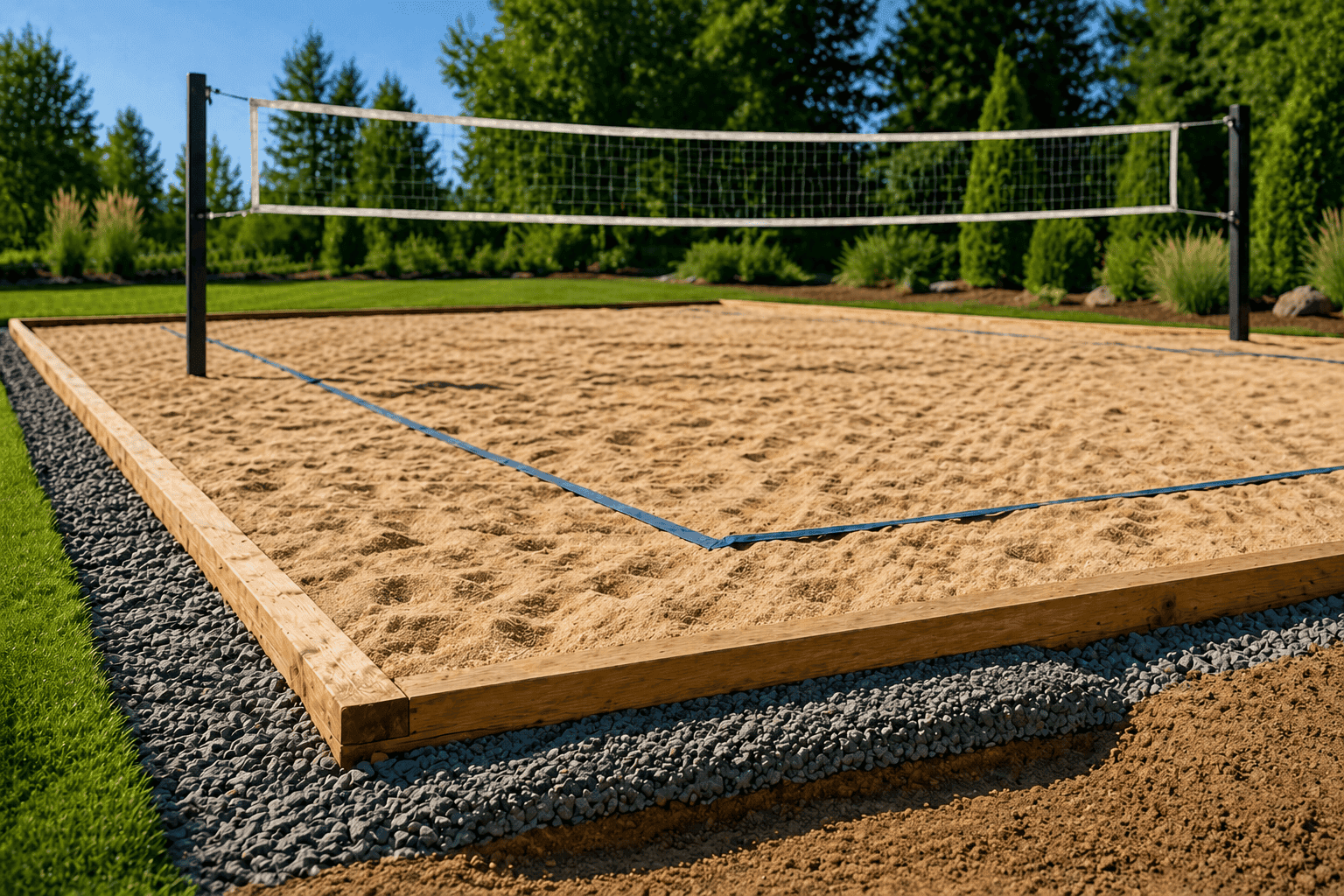
Step One: Pick the Right Location
Before you move any dirt, think about the space.
You want:
- Level ground or a spot that can be graded
- Natural drainage away from the center
- Enough room around the court for safe play
- Sun exposure that makes sense for your climate
A standard court is 16 meters by 8 meters for play. You also need at least 6 feet of clearance around the edges. If space is tight, games feel cramped and unsafe.
If you found a sand volleyball court near me that feels comfortable, notice how much open space surrounds it. That is not an accident.
Step Two: Prepare the Subgrade
The biggest mistake we see is skipping proper base prep. People dig a shallow area, dump sand, and call it done. That leads to shifting, water pooling, and uneven spots.
You need to:
- Excavate deep enough for base and sand layers
- Compact the native soil
- Grade the area slightly for water flow
Most courts need at least 16 inches of sand depth. That means digging well below the final grade.
The subgrade must be firm. If it is soft, the entire court will move. This is the part that determines whether the court stays level long-term, and it is a key step to build the perfect sand volleyball court.
Step Three: Install a Proper Base Layer
Sand alone is not enough. Underneath, you need structure. This is where 3/4″ Crushed Rock comes in.
We recommend laying a compacted layer of 3/4″ Crushed Rock below the sand. It provides:
Stability
- Drainage
- Resistance to settling
- Long-term durability
Typically, 4 to 6 inches of compacted material is enough for residential courts. Heavier traffic may require more.
Without this base, your sand shifts over time. Low spots form. After heavy rain, the center turns soft. A proper base prevents those headaches.
Step Four: Choose the Right Sand
Not all sand works for volleyball. A lot of sand looks the same until you actually play on it, which is why understanding volleyball court sand types helps you avoid a surface that feels loose, rough, or unstable.
You want clean, angular sand that:
- Drains well
- Does not compact too tightly
- Feels soft but stable
- Has minimal dust
Rounded beach sand shifts too much. Construction sand may be too coarse. The right sand makes jumping, diving, and quick direction changes safer.
In our experience, sand quality affects performance more than people expect. Courts with the right sand stay playable longer between maintenance.
Step Five: Install Containment and Edging
Edges matter. Without containment, sand spreads into the yard. Over time, depth decreases.
Use:
- Timber edging
- Concrete curbing
- Composite border systems
This keeps the sand in place and protects your investment.
Step Six: Drainage Planning
Drainage separates good courts from frustrating ones. One detail that plays a big role here is grading, because the ideal particle size for volleyball sand affects how fast water moves through the surface.
Water should move down through the sand and base, then away from the playing area. In wetter climates, we sometimes add a perforated drainage pipe under the base layer.
If you have ever searched for a sand volleyball court near me after rain, you know some courts stay playable while others flood. The difference is in drainage planning.
Maintenance Matters
Even the best court needs upkeep.
Plan to:
- Rake weekly
- Check sand depth monthly
- Top off the sand every few years
- Inspect edges and net anchors
A well-built court with properly maintained volleyball court sand can last 10 to 15 years. Skipping maintenance shortens that lifespan significantly.
Working With ContractorLOADS
If you want materials that perform the way they should, the supplier matters. At ContractorLOADS, we supply quality sand and 3/4″ Crushed Rock that meet real construction standards. We help you calculate volume, plan depth, and select the right base so your court holds up under regular use.
We have seen enough failed builds to know that cutting corners costs more later. Starting with the right materials saves you time and money.
Conclusion
Building the perfect volleyball space takes more than dropping sand into a hole. It requires planning, structure, and the right materials.
To get it right, remember:
- Choose level ground with good drainage
- Compact the subgrade properly
- Install a solid base of 3/4″ Crushed Rock
- Use clean, sport-grade sand
- Contain the edges
If you are still searching for a sand volleyball court near me, building your own may be the better option. With the right base and proper materials like 3/4″ Crushed Rock, you create a space that stays firm, drains well, and supports real play for years.
Need materials delivered? Get a quote for volleyball sand and 3/4″ crushed rock from ContractorLOADS.
FAQs
1. Does ContractorLOADS recommend sand volleyball court near me options for backyard builds?
Yes. When customers search for a sand volleyball court near me, we often help them design and build their own backyard space. We guide you on proper excavation depth, base preparation, sand selection, and drainage planning so your court performs well and lasts for many years.
2. How deep should the sand be for a volleyball court?
A safe and playable volleyball court should have at least 16 inches of clean sand. This depth helps cushion jumps and dives while reducing injury risk. Shallower sand can expose the base layer over time and create harder landing areas that affect comfort and performance.
3. Why is 3/4″ Crushed Rock used under sand?
3/4″ Crushed Rock is used as a compacted base because it creates stability and allows proper drainage beneath the sand layer. Without this foundation, sand can shift, settle unevenly, or hold water. A strong base keeps the surface level and improves long-term durability.
4. How often should sand be replaced or maintained?
Most courts require regular raking and inspection to maintain even depth and surface quality. Depending on use and weather conditions, you may need to add fresh sand every two to three years. Proper maintenance helps prevent hard spots, uneven areas, and drainage problems.