
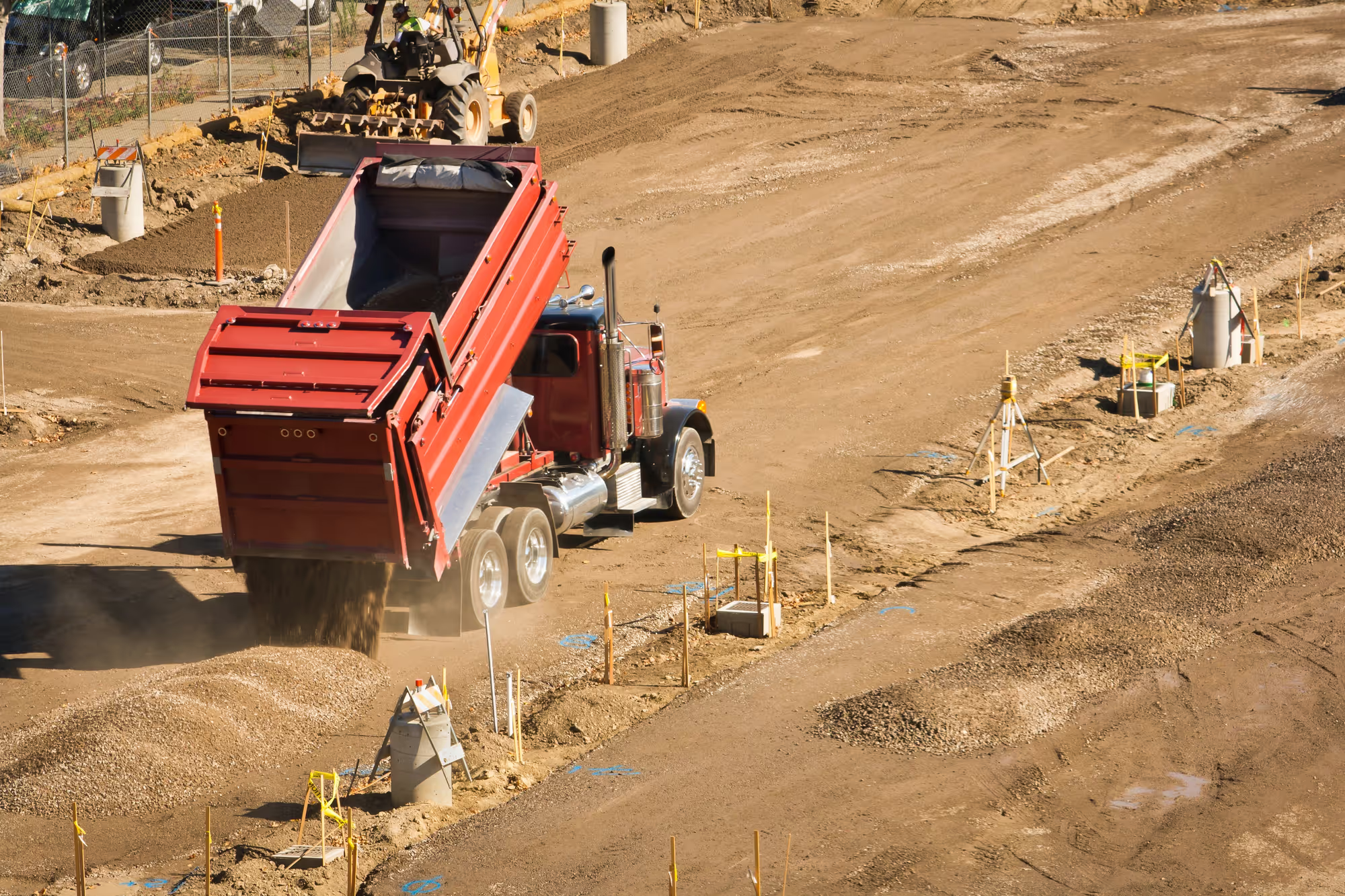
Multi-market delivery

Get a free quote
ContractorLOADS
Construction

Construction Sand

During the last 40 years the ContractorLOADS management and founders have produced and supplied high quality sand and gravel to contractors & aggregate users across California.

Construction Sand

Construction Sand: Essential Construction Materials

From durable road bases to decorative landscape stone, ContractorLOADS supplies premium crushed rock and gravel for projects that demand lasting performance.

Construction Sand Overview

At ContractorLOADS, we specialize in delivering top-quality sand materials tailored to meet a variety of construction needs. With over two decades of experience in the sand mining industry, we have established a reputation for excellence in Southern California.

Applications:

  • General construction applications
  • Masonry work
  • Plastering projects
  • Concrete production
  • Road building

Quality Standards

Testing standards adhered to:

  • Sieve Analysis (ASTM C-136)
  • Specific Gravity (ASTM C-127/C-128)
  • Sand Equivalent (CTM – 217)
  • Cleanness Value (Caltest 227)
  • Mortar Strength (Caltest 515)
  • R-Value (CTM 301F)

Sand Materials

Top-tier sand stands as a testament to its superior quality. With a consistently fine and pleasing texture, it exhibits a natural color palette that echoes the beauty of American landscapes.

Construction Sand Aggregates (Product Listings)

  1. 1Volleyball Court SandSand used for volleyball courts is typically fine, clean, and free of debris.
  2. 2Golf Course SandSpecifically designed for golf course bunkers, this sand has ideal drainage properties.
  3. 3Decomposed GraniteThis material consists of weathered granite rock fragments and is used for pathways, driveways, and as a decorative ground cover.
  4. 4Washed Concrete SandThis type of sand is cleaned to remove impurities and is used in concrete production.
  5. 5Washed Plaster SandPlaster sand is washed similarly to concrete sand to remove clay, silt, and other contaminants.
  6. 6Dry Plaster SandThis sand is dried to eliminate moisture, making it ideal for plastering.
  7. 7Dry Screened SandDry screened sand is filtered to remove larger particles and debris.
  8. 8Fill SandThis sand is commonly used as a base material in patio construction.
  9. 9Fill MaterialMost commonly utilized to provide a solid foundation beneath pavers.
  10. 10Screened DirtScreened dirt is a mixture of soil and sand that has been filtered to remove rocks and debris.
  11. 11TopsoilRich in organic matter and nutrients, topsoil is used for gardening and landscaping.
  12. 12Import SandSand that is imported from other regions or countries.
  13. 13Import FillImported fill material is used to create a stable base or foundation.
  14. 14SE 30 SandThis is a specific grade of sand used for various construction and industrial applications.
  15. 15SR 50 SandAnother specific grade of sand, SR 50, is used in construction projects requiring precise sand quality.
  16. 16Bank SandA naturally occurring sand found in riverbanks and quarries.
  17. 17Industrial Silver SandFine, high-purity sand used in industrial applications.
  18. 18#16 SandThis is a coarser grade of sand, often used in concrete mixes.
  19. 19#20 SandA medium-grain sand used in various construction applications.
  20. 20#30 SandA finer grade of sand used for finishing concrete surfaces.
  21. 21Playground SandClean, fine sand used in playgrounds to provide a soft, safe surface for children.
  22. 22Gas SandSand used in gas well drilling and fracking operations.

Areas ContractorLOADS Serves

Western Material has been a leading supplier of construction materials to contractors and other aggregates for over 40 years.

Locations served:

  • Los Angeles (South Bay, San Gabriel Valley, Santa Clarita Valley, San Fernando Valley, High Desert & San Bernardino County, Ventura County & Santa Barbara, Orange County)
  • San Diego (including Riverside County)
  • San Francisco (including San Jose, East Bay, North Bay, Sacramento)

Frequently Asked Questions

Sand & Gravel

When would I use sand vs gravel in building stuff?
Sand's great for masonry work, like with cement, or for leveling things out. Gravel, on the other hand, is a champ for driveways, helping with drainage, or serving as the foundation for roads.
Do I need washed or unwashed sand for my project?
Well, if you're looking to mix with cement, washed sand's your best friend. But if you just need to level or fill something, unwashed should do the trick.
How heavy is a big pile of sand or gravel?
A cubic yard of this stuff usually weighs somewhere between 1.25 to 1.5 tons.
Any tips for figuring out how much material I need?
Remember this little tidbit: 1 cubic yard can roughly cover about 100 square feet if you spread it 2-3 inches deep.
How quickly can I get a truck delivery?
You're usually looking at about a day or two, but it might change based on how much you need and where you're located.
Does ContractorLOADS deliver on weekends, holidays and nights?
Yes we can deliver on Saturdays when arranged in advanced for a slightly higher service charge.
What are the main differences between sand and gravel?
Sand particles are typically smaller and come from pulverized rock or minerals. Gravel, on the other hand, consists of larger particles.
What are the primary uses of sand in construction?
Sand is versatile. It's used in concrete mixing, masonry work, plastering, and even as a base for pavers.
How can I determine the right type of gravel for my project?
It depends on the project. For driveways, a compactable gravel like Class 2 road base is ideal.
How do I prevent weeds from growing through my gravel path or driveway?
Before laying gravel, it's advisable to place a weed barrier or landscaping fabric.
Can sand be used for pet areas, like a sandbox or a cat litter area?
Yes, play sand is often used for children's sandboxes and can be used for pet areas as well.
What is the difference between "washed sand vs unwashed screened dry sand"?
Washed sand has been screened at 5/32" (finer) or 3/16" (corser) and cleaned of silt, clay, and other impurities.
How can I ensure my gravel driveway remains even over time?
Regular maintenance, like raking to spread the gravel evenly and adding a new layer as needed.
How often should I replenish or top up my gravel areas?
Depending on the traffic and wear and tare, a gravel area might need replenishing every 1-2 years.
I'm planning a garden pathway. Would sand or gravel be better?
Both can work! Gravel provides a firmer, crunchier path and offers excellent drainage.
How do I calculate the amount of sand or gravel needed for my project?
A general rule is that 1 cubic yard can cover 100 square feet to a depth of 2-3 inches.
How much does a cubic yard of sand or gravel weigh?
Typically, a cubic yard of sand and gravel weighs between 1.25 to 1.5 tons, or 2,500 to 3,000 pounds.
What's the difference between pea gravel and decomposed granite?
Pea gravel consists of small, rounded stones, often used for decorative purposes. Decomposed granite is a granular material.
Do you recommend a specific gravel size for drainage solutions?
This depends on application use. But as a general rule drainage, slightly larger gravels...are ideal.
Contractors need high quality sand and gravel materials that meet specs?
ContractorLOADS adheres and insures that materials provided to contractors and their jobs meets standards. (Testing standards referenced: Aggregate Gradation, Specific Gravity and Absorption, Los Angeles Abrasion Test, Soundness Test, California Bearing Ratio, Unconfined Compressive Strength, Sieve Analysis, Particle Shape and Surface Texture, Flakiness and Elongation Index, Sulfate Soundness Test, Alkali-Silica Reactivity Test)

Homeowners

I'm new to home improvement. How do I know which material is right?
We are happy to make recommendations, but its best you speak to a qualified landscaper or contractor.
How can I calculate the amount of material I need for my project?
A simple formula is to divide the area (in square feet) by 100 to estimate the number of cubic yards required.
Using the formula, how many cubic yards would I need for a 500 sq. ft. area?
For a 2-3 inch depth, you'd need approximately 5 cubic yards.
Can I mix different materials, like sand and decomposed granite, for my project?
Yes, depending on the project, mixing materials can provide both functional and aesthetic benefits.
Is there any prep work I need to do on the site before the material is spread?
It's recommended to clear the area of any debris, ensure it's level.
How long will the materials last? Do I need to replenish them periodically?
The longevity depends on its use. While gravel driveways might require occasional replenishment.
Do the colors of materials like decomposed granite or gravel fade over time?
Natural materials might experience slight fading over time due to weather and wear.
How do I maintain the appearance and function of the materials once laid?
Regularly removing debris, occasional raking or leveling for even distribution.
Can these materials be laid in areas with heavy foot or vehicle traffic?
Absolutely. Some materials, like compacted gravel, are designed to withstand heavy traffic.
Are these materials pet-friendly?
Most of our natural materials, like sand and gravel, are pet-friendly.
Do you deliver small quantities suitable for homeowner projects, or is there a minimum order?
Generally, we have a 1 ton or 1 cubic yard minimum for small orders.
What is your cancellation policy?
You can cancel at any time before the material is loaded and shipped from the plant or quarry.
Can I look at the sand & gravel material before I purchase it?
Yes, for most of our sand and gravel materials, we have pictures and material test lab reports.

Cobbles, Rip Rap, & Boulders

How big do these cobbles and boulders get?
We've got all sizes, from cobbles to massive boulders...Most common and popular is our 6 inch to 18 inch.
Is your cobbles and rip rap appropriate for different types of public and private construction job applications?
Yes our materials are tested regularly and meet all required standards.

Baseball Infield Mix / Red Clay

What makes your baseball infield mix special?
We've dialed in the perfect blend of sand for drainage, clay for that nice binding effect.
Would this infield mix work for major league fields?
Our mix suits all baseball fields in schools, little leagues, colleges, and minor and major leagues.
What's the ideal composition for a baseball infield mix?
An ideal baseball infield mix typically consists of a balance of sand, clay, and silt.
How deep should the red clay/infield mix be laid on a baseball field?
The recommended depth varies, but generally, 3-4 inches is common.
How often should the baseball infield mix be replenished or replaced?
Depending on usage and weather conditions, infield mix should be checked annually.
What are the maintenance requirements for red clay?
Regular dragging to maintain a level surface, adequate moisture management.

Decomposed Granite (DG)

What's the best way to use decomposed granite in my garden?
Decomposed granite shines when used for pathways, driveways, and patios.
Which is better for landscaping, decomposed granite or crushed rock?
It's all usage case...Decomposed granite gives a more rustic feel, while crushed rock is a bit more structured.
Any chance you've got different varieties of decomposed granite and crushed rock?
We've got a mix of sizes and colors to match whatever you're dreaming up.
What are the color options available for decomposed granite?
We offer decomposed granite (DG), which typically comes in a variety of natural hues, including gold, tan, brown, grey, and rose.

Ready to move your next load?

Tell us the material, quantity, and jobsite ZIP — get competitive pricing and dependable delivery, often same-day.